Not every part of the Australian economy faces the same risk from AI. Some sectors are genuinely sheltered. Others are directly in the firing line. Knowing the difference matters for your career, your business, and your portfolio.
At Bluestone Intelligence, we rate 15 sectors of the Australian economy on a five-point scale for AI displacement risk. The ratings are not opinions. They are derived from structural exposure analysis, 19 economic indicators scored against defined thresholds, and scenario-weighted impact modelling.
Here is where every sector stands as of March 2026.
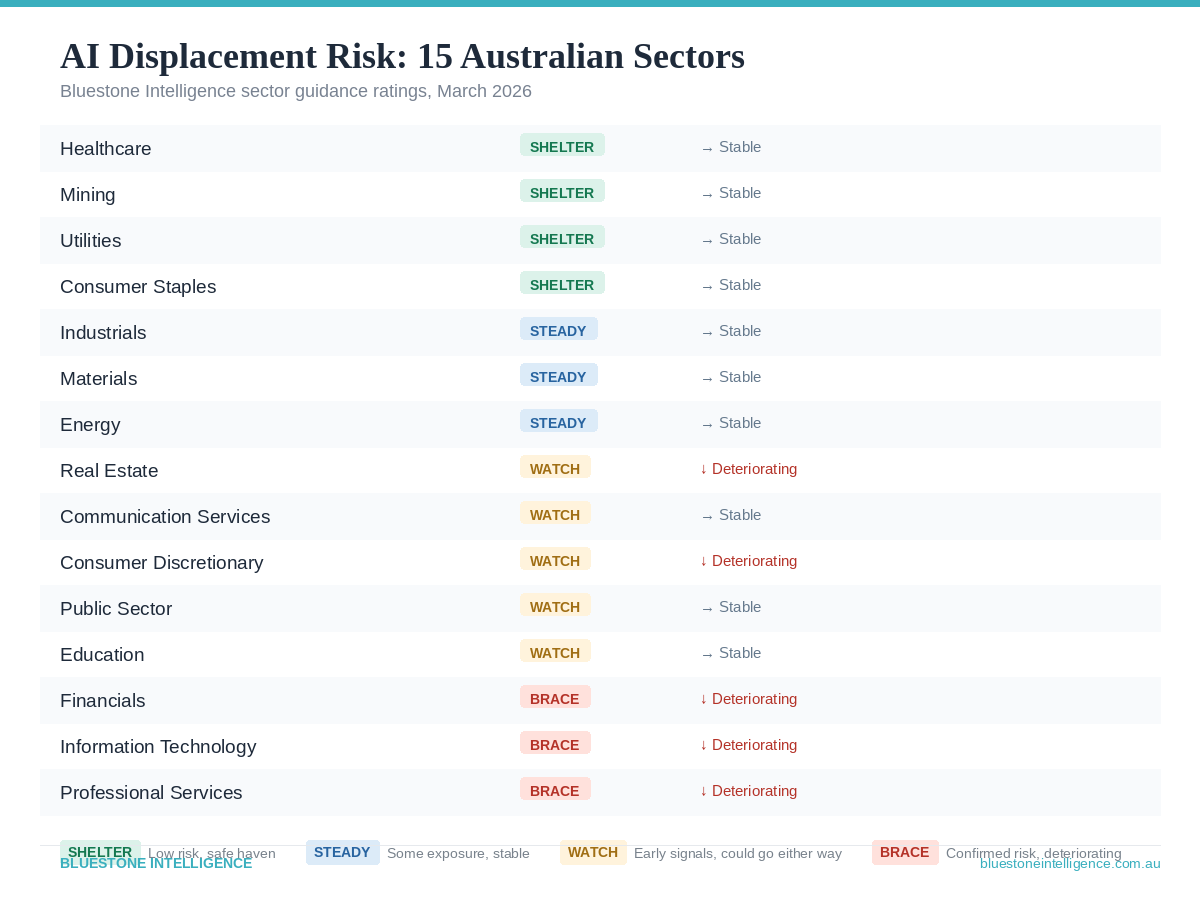
Full Sector Ratings: March 2026
| Sector | Rating | Key reason |
|---|---|---|
| Healthcare | Physical care dominates. AI augments, does not replace. | |
| Consumer Staples | Essential spending. Physical supply chains. Low structural exposure. | |
| Utilities | Regulated, essential, physical infrastructure. | |
| Mining | Physical extraction. Strong union protections. Commodity cycles dominate. | |
| Industrials | Physical work resistant to AI displacement. Engineering roles augmented, not replaced. | |
| Materials | Physical operations with commodity-driven economics. | |
| Energy | Physical operations dominate. Primary risk is geopolitical (Hormuz), not AI. | |
| Real Estate | Indirect exposure. CBD vacancy at record highs. White-collar unemployment flows into property demand. | |
| Communication Services | Content generation exposure, but enterprise adoption slower than other sectors. | |
| Consumer Discretionary | Indirect exposure through consumer spending pressure. Some retail automation. | |
| Public Sector | Large admin workforce, but enterprise agreements and APS consultation requirements provide significant buffers. | |
| Education | Administrative and assessment functions exposed. Teaching itself resistant. Reskilling demand is a wildcard. | |
| Financials | Big Four hiring freezes confirmed. Agentic AI deployment accelerating. BRACE, deteriorating. | |
| Information Technology | Code generation displacing junior roles. IT support automation accelerating. BRACE, deteriorating. | |
| Professional Services | Legal, accounting, consulting directly in the firing line of agentic AI. Highest structural exposure. BRACE, deteriorating. |
SHELTER: The Safe Havens
Healthcare. Physical care dominates. Demand is growing. Administrative roles face some exposure but the core of the sector is interpersonal and hands-on. AI augments rather than replaces.
Consumer Staples. Essential spending is resilient regardless of economic conditions. Physical supply chains. Low structural exposure.
Utilities. Regulated, essential, physical infrastructure. Among the most protected sectors in the economy.
Mining. Physical extraction. Strong union protections. Autonomous vehicles augment rather than displace. Commodity cycles matter more than AI for this sector.
STEADY: Some Exposure, Stable for Now
Industrials. Physical work is resistant to AI displacement. Engineering roles face augmentation, not replacement, at this stage.
Materials. Similar to mining. Physical operations with commodity-driven economics.
Energy. Physical operations dominate. The primary risk factor for this sector is geopolitical (the Hormuz situation), not AI. Read more in The RBA Rate Trap.
WATCH: Early Signals Emerging
Real Estate. Not directly exposed to AI, but heavily exposed indirectly. CBD vacancy is at record highs. Mortgage stress is rising. Employment weakness in white-collar sectors flows directly into property demand.
Communication Services. High content generation exposure but enterprise adoption in media has been slower than in other sectors. Direction could shift quickly.
Consumer Discretionary. Indirect exposure through consumer spending pressure. The risk is that people who lose white-collar jobs stop spending on non-essentials.
Public Sector. Large administrative workforce, but enterprise agreements and APS consultation requirements provide significant buffers. The speed of AI adoption in government is much slower than in the private sector.
Education. Administrative and assessment functions are exposed. Teaching itself is interpersonal and resistant. The wildcard is whether reskilling demand creates growth that offsets displacement.
BRACE: Confirmed Risk
Financials. The highest near-term displacement risk of any major sector. Big Four hiring freezes confirmed. Agentic AI deployment in lending, fraud detection, and customer service accelerating. BRACE, deteriorating. For the super fund implications, read Your Super Probably Holds CBA.
Information Technology. Code generation is displacing junior roles. IT support automation accelerating. The sector that builds AI is also the sector most disrupted by it. BRACE, deteriorating. The full picture on tech layoffs is in 4,450 Tech Jobs Cut in Sydney in 10 Weeks.
Professional Services. Legal, accounting, and consulting are directly in the firing line of agentic AI. This sector has the highest structural exposure of any in the model. The layoffs have not yet hit at scale in Australia, but the US transmission is underway. BRACE, deteriorating.
What This Means for You
If you run an SMSF or manage your own portfolio, check your sector concentration. If you are heavily weighted toward financials and tech (which most balanced super funds are), you may have more exposure than you realise.
If you work in a BRACE-rated sector, this is not a signal to panic. It is a signal to invest in skills that complement AI rather than compete with it. The augmentation opportunity is real. The wage premium for AI-skilled workers in exposed sectors is growing.
If you run a business, look at where your customers work. If your revenue depends on spending from people in BRACE-rated sectors, the downstream effects could reach you within 6 to 12 months.
Full sector detail, key signals, and scenario analysis at Bluestone Intelligence.
Get AccessBluestone Intelligence provides economic scenario analysis and general information only. It is not financial advice. Consult a licensed financial adviser before making investment decisions.